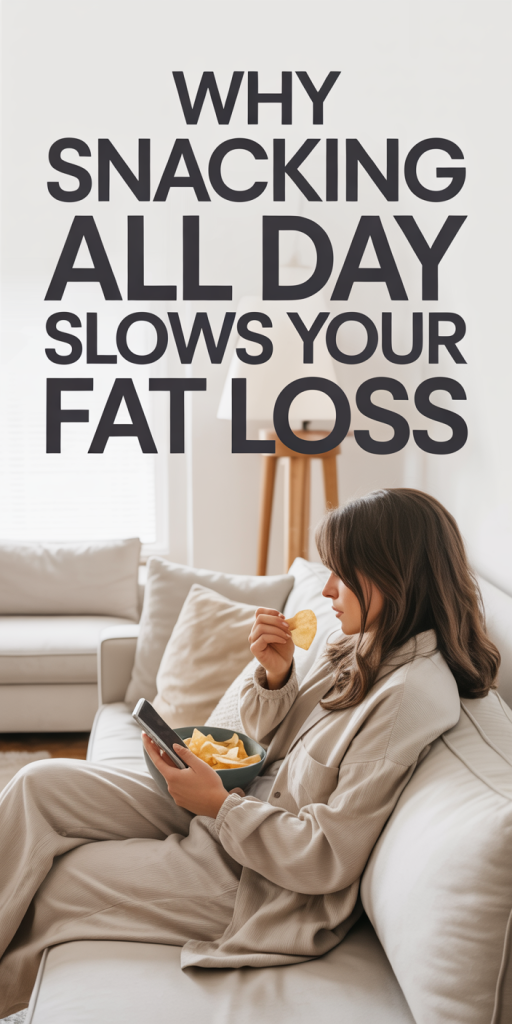
We’ve all been there: a handful of nuts mid-morning, a granola bar at 2 p.m., a quick cookie while we check email, and another snack after dinner “just because.” Grazing, eating small amounts throughout the day, feels convenient and like a harmless way to keep energy steady. But if our goal is to lose fat, that constant nibbling can actually slow progress. In this text we’ll explain the physiology behind why snacking all day undermines fat loss, point out common pitfalls, and give evidence-based, practical alternatives so we can eat more strategically without feeling deprived.
How Fat Loss Really Works: Calories, Hormones, And Metabolism
Calories In vs. Calories Out: The Foundation
Fat loss eventually depends on an energy deficit: we need to expend more calories than we consume over time. That’s the baseline. But calories alone don’t tell the whole story. How we distribute those calories across meals, the composition of those calories (protein vs. carbs vs. fat), and the hormonal environment we create all affect how readily our bodies tap stored fat.
Hormones That Matter: Insulin, Ghrelin, Leptin, And Cortisol
Hormones are the traffic signals for energy use and storage. Insulin directs nutrients toward storage and suppresses fat breakdown: ghrelin stimulates appetite: leptin signals satiety: and cortisol influences energy mobilization and can increase appetite when chronically elevated. Frequent eating patterns and certain snack types can nudge these hormones in directions that favor storage or ongoing hunger.
Evidence From Studies: What Research Shows About Meal Frequency
The idea that more frequent, smaller meals speeds metabolism has been popular for decades. But randomized trials and meta-analyses show minimal differences in total daily energy expenditure between frequent small meals and fewer larger meals when calories and macronutrients are equal. Some studies even suggest fewer, larger meals or time-restricted eating can improve fat loss, appetite control, and insulin sensitivity for certain people. The takeaway: meal frequency isn’t a magic bullet, the quality of food, total calories, and hormonal responses matter more.
How Frequent Snacking Affects Appetite Regulation
How Snacking Disrupts Hunger Cues And Promotes Overeating
When we snack throughout the day, our internal hunger cues get muffled. The body’s natural ebb and flow of hunger and satiety relies on periods without incoming calories so that ghrelin falls and leptin/pancreatic signals can register fullness. Constant intake keeps ghrelin from cycling down properly and trains us to eat in response to external cues instead of real physiological need. As a result, portion sizes drift upward and it becomes easier to eat more than we realize.
Psychological Triggers: Boredom, Stress, And Cue-Driven Eating
Not all snacking is physiological, much of it is behavioral. We snack when we’re bored, stressed, watching TV, or near food cues (a candy bowl or open pantry). These triggers hijack appetite regulation. Over time, cue-driven snacking becomes habitual: we associate certain contexts with eating, and that association drives us to reach for calories even when we’re not hungry. Breaking those learned responses is as important as choosing better snacks.
Insulin, Blood Sugar, And The Metabolic Impact Of Constant Snacking
Types Of Snacks That Spike Insulin Versus Those That Don’t
Quickly digestible carbohydrates, candy, chips, pastries, many granola bars, cause rapid blood sugar and insulin spikes. In contrast, protein, fiber, and fats slow digestion and blunt insulin responses. Even some “health” snacks, like flavored yogurt or certain protein bars, can be higher in sugar than they seem. Choosing low-glycemic snacks (e.g., Greek yogurt with berries, raw veggies with hummus, a handful of almonds) helps minimize insulin peaks and the subsequent hunger that follows.
How Constant Insulin Elevation Affects Fat Storage And Mobilization
Insulin’s role is to promote nutrient uptake and storage: when insulin is chronically elevated because we’re eating constantly, the body is in a more storage-friendly state and less capable of mobilizing fat for fuel. Even if our total calorie intake is moderate, preventing insulin from falling for long enough can reduce lipolysis (fat breakdown). In other words, frequent snacking can chemically bias the body toward storing rather than burning fat.
Snacking, Sleep, And Circadian Effects On Metabolism
Eating late at night or grazing across the circadian cycle can disrupt metabolic rhythms. Our insulin sensitivity and fat oxidation are generally better during daytime hours. Nighttime snacking can impair sleep quality and shift hormones such as cortisol, which together reduce metabolic flexibility. For those trying to lose fat, consolidating intake during daylight hours, or at least avoiding late-night high-carb snacks, supports better metabolic outcomes.
How Snacking Changes Energy Expenditure And Fat Oxidation
Thermic Effect Of Food And Nonexercise Activity Thermogenesis (NEAT) Changes With Snacking
Every meal has a thermic effect, energy used to digest and process food, which varies by macronutrient (protein has the highest TEF). But, splitting calories into many small snacks doesn’t meaningfully increase total TEF compared with eating the same calories in fewer meals. Conversely, frequent snacking can subtly reduce NEAT: when we’re grazing, we may sit more and move less because we’re stationary with food in hand or mid-screen time. Reduced NEAT can erase the small calorie benefits we hope to gain from frequent meals.
While immediate post-meal energy expenditure may tick up briefly after each snack, the overall daily effect is negligible. More importantly, prolonged availability of exogenous calories suppresses fat oxidation. When the body has a steady stream of incoming energy from snacks, it has less reason to tap stored fat, which slows visible fat loss over time.
Common Snacking Pitfalls That Sabotage Weight Loss
Mindless Portion Drift And Hidden Calories In Frequent Snacking
Snacks are where “invisible” calories hide. A few bites here and a few bites there add up: a day of casual grazing can easily include 300–800 extra calories beyond planned meals. We underestimate portions, an open bag makes it harder to stop, and pre-packaged portions are often larger than we think. Mindless eating while distracted (work, commuting, screens) bypasses satiety signals and encourages continual nibbling.
Pair that with high-reward foods (sugary, salty, fatty combinations), and snacking becomes a fast route to caloric surplus. Even snacks we consider healthy, dried fruit, trail mix, smoothie bowls, can be caloric densitometers if we’re not paying attention. That’s one reason why grazing often backs us into slower fat loss: the math of calories in vs. out gets distorted without clear meal structure.
Smart Snacking Strategies That Support Fat Loss
Nutrient Density, Protein, And Fiber: Choosing Snacks That Promote Satiety
If we’re going to snack, we should make those calories count. Prioritize snacks high in protein and fiber and moderate in healthy fats. Examples: a hard-boiled egg with a few carrot sticks, plain Greek yogurt with a tablespoon of chia and berries, cottage cheese with cucumber, or a small portion of nuts plus an apple. Protein increases the thermic effect and preserves lean mass during weight loss: fiber slows gastric emptying and reduces post-snack hunger.
Timing Snacks Around Workouts And Protein Distribution For Fat Loss
Snacking strategically matters. We get the most metabolic bang from calories consumed around workouts: a small carb + protein snack before or after resistance training helps performance and recovery and supports muscle retention. Spreading protein evenly across meals and snacks (roughly 20–40 g per eating occasion, depending on body size) helps with satiety and muscle maintenance, which keep resting metabolic rate higher during weight loss.
Intermittent Fasting And Structured Eating Windows: Pros And Cons
Time-restricted eating or intermittent fasting simplifies decision-making and naturally reduces opportunities to graze. Many people find an 8–10 hour eating window reduces daily calories and improves appetite control. But, it’s not universally superior: athletes, people with certain medical conditions, or those who struggle to meet protein needs in fewer meals may not benefit. The point isn’t dogma, it’s choosing a structure that reduces mindless snacking, improves hunger cues, and fits our lifestyle.
Practical Meal-Timing And Habit Changes To Break The Grazing Cycle
Behavioral Tactics: Planning, Out-of-Sight, And Trigger Management
We change behavior by changing environments. Make snacks less convenient: pre-portion treats into small containers (so we can’t overreach into a bag), store them out of sight, and keep tempting items off counters. Plan meals and snacks in advance so we’re not choosing impulsively. Replace the usual cue-response loops (work -> chip bag) with alternative actions: a short walk, a glass of water, or 5 minutes of deep breathing can interrupt the urge to snack.
Practical Daily Schedule Examples: From Busy Professional To Parent
A busy professional: breakfast at 7:30 (omelet with veggies + whole-grain toast), mid-day lunch at 12:30 (salad with chicken and quinoa), pre-work snack only if training at 5:00 (banana + 10 g nut butter), dinner at 7:00 (salmon, sweet potato, greens). No mindless grazing between meals: water and black coffee are go-to.
A parent on-the-go: breakfast at 7:00 (Greek yogurt + fruit), planned snack for kids and self at 10:00 (carrot sticks + hummus portioned in containers), lunch at 1:00 (wrap with turkey and lots of veg), optional afternoon snack at 4:00 if needed (hard-boiled egg + apple), dinner at 6:30. Planning snacks as part of the day prevents opportunistic grazing.
When Snacking Helps: Special Cases (Athletes, Blood Sugar Issues, Medications)
We don’t want to throw the baby out with the bathwater. Athletes with high training volumes may need frequent feeding to meet energy and recovery demands. People with reactive hypoglycemia, diabetes medication protocols, or certain metabolic disorders may require scheduled snacks to prevent dangerous blood sugar dips. In these cases, snacks should be structured, measured, and clinically guided rather than habitual grazing.
Conclusion
How To Track Progress And Adjust: Metrics Beyond The Scale
If we stop grazing and adopt a more structured approach, how do we know it’s working? Rely on multiple metrics: weekly body-weight trends (not daily), body circumference measurements, progress photos, strength and performance in the gym, and how our clothes fit. Pay attention to energy, sleep quality, and hunger patterns, improved appetite signals and fewer random cravings are wins on their own.
Practical next steps:
- Log food for a week to spot hidden snack calories. Awareness alone often reduces grazing.
- Set an eating window or defined meal times that fit your life, and plan snacks purposefully (protein + fiber focused).
- Remove cues and make snacks less convenient: pre-portion when you do have treats.
- Time carbs around workouts and prioritize protein at each eating occasion to preserve muscle and support satiety.
- If you have special needs (athlete, medication, blood sugar issues), consult a clinician for tailored guidance.
Grazing feels normal in our food-rich environment, but it creates hormonal and behavioral conditions that favor fat storage and blur hunger signals. By intentionally structuring when and what we eat, and by using practical habit changes to reduce mindless nibbling, we give our bodies a better chance to access stored fat and preserve muscle. That’s how we make fat loss faster, simpler, and more sustainable.
Want More From Nick?
Join The Health-First Fat Loss Club
✓ All 16+ Programs
✓ Private Community
✓ Weekly New Content
✓ Cancel Anytime
Nick Garcia
Health & Nutrition Expert · 15+ Years Experience