Swelling shows up in inconvenient moments: after a long flight, a grueling workout, or a day trapped at our desks. We’ve all reached for elevation or cold packs, but there’s a surprising amount we can do in just 60 seconds to nudge fluid out of an irritated area and feel noticeably better. In this text we explain what causes swelling, why a targeted 1-minute reset can actually work, and how to perform a safe, repeatable protocol anywhere, at home, at work, or on the go. Along the way we’ll cover safety limits, quick variations for specific body parts, and how to integrate this reset into daily life so small gains add up.
What Causes Swelling And How To Recognize It
Common Types Of Swelling (Edema, Inflammation, Injury-Related)
Swelling is the visible or palpable accumulation of fluid or tissue changes in a part of the body. We can think of it in three common buckets:
- Edema: This is excess interstitial fluid, the kind that pools in feet and ankles after a long flight or at the end of a long day of standing. It’s typically soft and pits when pressed (pitting edema).
- Inflammatory swelling: Caused by the body’s immune response to injury or irritants. It feels warmer, sometimes red, and is often accompanied by pain and reduced function. Examples include sprains, insect bites, and infectious processes.
- Injury-related localized swelling: After a sprain, strain, or blunt trauma, local swelling is driven by bleeding into tissues and inflammatory fluid. It’s protective but can restrict movement.
Understanding which type we’re dealing with matters because it determines the safest and most effective response.
Symptoms That Differentiate Mild Swelling From Concerning Swelling
Not all swelling is equal. Mild, transient swelling usually resolves with simple measures: concerning swelling needs prompt attention. Signs that we’re facing a more urgent problem include:
- Rapid onset of swelling over hours rather than days.
- Severe pain, increasing redness, warmth, or hard lumps under the skin.
- Shortness of breath, chest pain, or dizziness occurring with swelling, these are systemic red flags.
- Unilateral calf swelling with tenderness when we flex the foot upward (possible deep vein thrombosis).
- Swelling that doesn’t improve with typical measures (elevation, rest, compression) or that progressively worsens.
Mild cases: soft, slightly puffy tissue, better after rest and elevation, minimal pain. Concerning cases: tense, increasingly painful, systemic symptoms, or vascular findings that need medical evaluation.
Contributing Factors: Diet, Medication, Posture, And Medical Conditions
Multiple factors influence why and where swelling happens. We should consider:
- Diet: High sodium intake promotes water retention. Alcohol can dilate vessels and increase fluid leakage, contributing to puffiness.
- Medications: Some calcium channel blockers, NSAIDs, corticosteroids, and certain diabetes medications can cause fluid retention.
- Posture and venous return: Sitting or standing for long periods reduces muscle pump activity that normally helps return fluid to the heart. Gravity wins, and fluid pools in dependent areas like ankles.
- Medical conditions: Heart failure, kidney disease, liver disease, and lymphatic dysfunction cause chronic or recurrent edema and require clinician management.
When we approach swelling, we consider these contributors so our 1-minute reset complements, rather than replaces, broader management.
Why A 1-Minute Reset Can Work: Physiology In Plain Terms
How Circulation, Lymphatic Drainage, And Breath Affect Swelling
Three systems largely determine whether fluid stays in tissues or gets moved out: blood circulation, the lymphatic system, and the mechanical effects of breathing.
- Circulation and muscle pump: Skeletal muscle contractions compress veins and propel blood back toward the heart. When we’re active, this muscle pump reduces venous pressure and prevents fluid from accumulating.
- Lymphatic drainage: The lymphatic system returns interstitial fluid and proteins to the bloodstream. It relies on gentle compression, vessel valves, and movement rather than a central pump, so even short, targeted motion can increase lymph flow.
- Respiratory pump: Deep diaphragmatic breathing creates pressure changes in the chest that help draw venous blood back from the periphery. Coordinating breath with movement amplifies fluid clearance.
A focused one-minute protocol leverages these mechanisms: we use posture, muscle engagement, and breath to transiently increase venous and lymphatic return, reduce capillary leakage pressure, and mobilize fluid away from a swollen area.
Evidence And Mechanisms: What Research Suggests About Short Interventions
Research on brief interventions is growing. Studies show that even short bouts of movement or compression can transiently reduce limb volume. For example:
- Intermittent muscle contractions (simple ankle pumps) measurably reduce venous pooling after surgery or during prolonged sitting.
- Manual lymphatic drainage performed for short intervals can improve subjective swelling and comfort in conditions like mild lymphedema.
- Combining deep breathing with movement enhances venous return more than movement alone.
While a single 60-second session won’t reverse edema caused by heart or kidney failure, it can provide meaningful short-term relief for positional or post-exertional swelling. The effect is immediate but often temporary, repeating the reset and addressing underlying contributors produces lasting benefit.
When A Quick Reset Is Likely To Help, And When It Won’t
Likely to help:
- Dependent edema from prolonged sitting/standing.
- Post-exercise muscle soreness with mild accompanying swelling.
- Mild inflammatory swelling shortly after activity or minor trauma.
Unlikely or insufficient:
- Swelling from serious systemic disease (congestive heart failure, nephrotic syndrome). These require medical treatment.
- Acute infections or rapidly expanding hematomas, where the cause must be treated directly.
- Deep vein thrombosis, immediate medical evaluation is needed: a 1-minute reset won’t dissolve a clot and could be dangerous without assessment.
In short, the 1-minute reset is an immediate, conservative self-care tool for common, benign swelling, not a substitute for medical diagnosis or therapy when the cause is serious.
Safety, Contraindications, And Red Flags
Who Should Avoid Or Modify The Reset (Pregnancy, Recent Surgery, Blood Clots)
We must be cautious and personalize the reset. People who should avoid or adapt it include:
- Those with known or suspected blood clots (DVT): We shouldn’t perform vigorous limb manipulations before getting medical clearance.
- Recent surgery or open wounds near the swollen area: Aggressive movement or compression can disrupt healing.
- Active infection or cellulitis: Movement could spread infection: prompt medical care is better.
- Pregnant people with preeclampsia or poorly controlled hypertension: Any intervention should be discussed with a provider.
- Severe cardiovascular disease: Sudden changes in venous return and blood pressure could cause symptoms: we recommend medical guidance.
For these groups, gentler adaptations (very light movement, elevation, and placing priority on medical review) are safer.
Signs To Stop Immediately And Seek Care
We stop the reset and seek care if we notice:
- Sudden sharp pain, rather than relief.
- Rapid expansion of swelling or increasing redness and warmth.
- Shortness of breath, chest pain, lightheadedness, or fainting.
- New neurological symptoms: numbness, weakness, or altered sensation.
If any of these occur, we treat the reset as a pause and seek urgent evaluation. Safety first: the goal is comfortable, controlled relief, not risk-taking.
Step-By-Step 1-Minute Reset For Immediate Swelling Relief
Preparation: Positioning, What You’ll Need, And Timing
We keep this reset simple so you can do it anywhere. For most areas, we’ll want:
- A chair or surface to recline on (a couch, airline seat, or even the floor will work).
- A small rolled towel or pillow (optional) to support a limb.
- A compression sleeve or light elastic band (optional short-term enhancement).
Timing: Choose a minute when you can relax focus on breath and movement without rushing, 60 seconds of focused breathing and motion is more effective than distracted repetition.
Positioning basics:
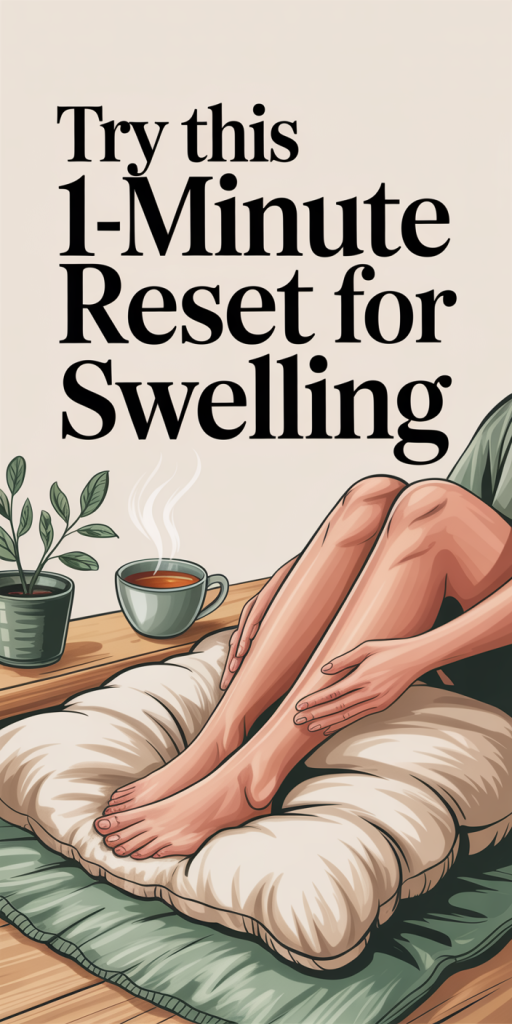
- For lower-limb swelling: recline and elevate the legs above heart level if possible. If that’s not practical, sit and place your feet on a stool while performing the protocol.
- For upper-limb swelling: rest the arm on a pillow or armrest slightly above heart level.
- For face/eyes: sit upright with chin slightly tucked to encourage lymph flow toward the neck.
The 60-Second Protocol, Second-By-Second Breakdown
We designed this protocol to be reproducible and efficient. Use a timer or count silently.
0–10 seconds: Settle and align. Get in the chosen position, support the swollen area, and breathe slowly to begin diaphragmatic engagement.
10–25 seconds: Begin repeated rhythmic contractions. For legs: rapid ankle pumps, point toes down, then flex up, about one every second. For arms: make gentle fist-clench-and-release cycles. For face: gentle lymphatic strokes along cheekbones toward the ears.
25–40 seconds: Deep diaphragmatic breaths coordinated with contractions. Inhale deeply through the nose for 3 counts: exhale slowly through the nose or mouth for 5 counts. On each exhale, emphasize a slightly stronger muscle contraction or light squeezing motion to propel fluid.
40–50 seconds: Add a 5–10 second hold of an isometric contraction (e.g., press the back of the knee down or squeeze the glutes) to momentarily increase venous return.
50–60 seconds: Slow down and reassess. Maintain elevation: continue gentle breathing. Notice any change in tension, temperature, or sensation.
We should end the minute by returning to a neutral resting posture and taking a moment to notice whether the area feels lighter, less tight, or cooler.
Quick Variations: Add Light Compression, Cold, Or Elevation In 1 Minute
If we want to amplify results and it’s safe to do so:
- Light compression: slip on a knee-high compression sleeve or elastic band for the reset, it increases the effectiveness of muscle pumps.
- Cold: a 30–60 second cool compress can reduce capillary leakage and inflammation, especially after acute injury. Don’t apply ice directly to skin: wrap in cloth.
- Elevation: whenever possible, elevate the swollen limb above heart level during the protocol. Gravity assists the lymph and venous return.
Combine these cautiously: compression plus elevation is often helpful, but avoid tight compression if there’s numbness or severe pain.
How To Breathe Effectively During The Reset
Breath is the secret multiplier. We use diaphragmatic breathing rather than shallow chest breaths:
- Place one hand on the belly to feel the diaphragm descend on the inhale.
- Inhale slowly for about 3 seconds, feel the belly rise.
- Exhale for about 5 seconds and gently contract the target muscles as we breathe out.
The extended exhale reduces thoracic pressure, enhancing venous return. Coordinating contraction with exhale gives each breath a mechanical boost to lymphatic and venous flow.
Adaptations For Limited Mobility Or Pain
If mobility is limited, we scale down but keep the core principles: gentle movement, breath, and elevation.
- Bedbound: perform gentle ankle circles, pump small toe movements, or do abdominal breathing while the limb is elevated on pillows.
- Pain-limited joints: perform isometric contractions in surrounding muscles (e.g., quad or glute squeezes for knee swelling) rather than moving the painful joint directly.
- Severe neuropathy or numbness: prioritize light elevation and breathing: avoid vigorous manipulations until sensation returns or we get medical guidance.
We want the reset to be accessible, not painful. Small, repeated efforts over the day often produce cumulative improvement.
Targeted Variations For Specific Body Areas
Feet And Ankles: Simple Moves And Elevation Options
Feet and ankles are common sites of dependent edema. Try this focused reset:
- Position: recline or sit with feet supported slightly above heart level if possible.
- Movement: rapid ankle pumps for 20–30 seconds, followed by 3 deep diaphragmatic breaths with plantarflexion on the exhale.
- Add-ons: slip on a light compression sock: if swelling is asymmetric and painful, consider brief cold application after the reset.
If we’re seated on a plane, do ankle circles and calf squeezes while keeping feet on the floor, these maintain venous flow until we can elevate later.
Hands And Fingers: Micro-Movements And Self-Massage Techniques
Hand swelling can be frustrating, especially after labor-intensive tasks or arthritis flare-ups.
- Position: sit with forearm supported on a table, hand slightly elevated.
- Movement: make a fist and release rhythmically for 30 seconds: then perform gentle milking strokes from the wrist toward the elbow to encourage lymph flow.
- Self-massage: use the opposite thumb to make small circular motions along the back of the hand toward the wrist.
We can use a soft compression glove briefly, but avoid restrictive tightness that impairs circulation.
Face And Eyes: Gentle Lymphatic Strokes And Cooling Tricks
Facial puffiness responds well to gentle lymphatic techniques and cooling.
- Position: sit upright with chin slightly tucked.
- Movement: use flat fingers to stroke from the center of the forehead outward, then from under the eyes toward the temples and down along the jawline to the neck, each stroke should be light and in the direction of lymphatic drainage.
- Cooling: a chilled (not frozen) gel mask for 60 seconds reduces vascular permeability and gives immediate sensation of decreased puffiness.
These techniques are gentle enough for most people and can be done discreetly in many settings.
Knees, Calves, And Arms: Quick Isometric And Circulation Boosts
For larger limbs, isometrics and combined breathing work well.
- Knees: while seated, perform quad sets, tighten the thigh for 8–10 seconds, relax, and repeat. Pair with diaphragmatic breathing.
- Calves: seated or supine, do 30–40 seconds of fast calf squeezes followed by a 5–10 second plantar flexion hold.
- Arms: perform shoulder blade squeezes or gentle biceps isometrics if the swelling is distal. Elevate the arm when possible.
These targeted moves increase local circulation without needing complex equipment and often produce quick subjective relief.
How To Make The Reset Part Of Your Daily Routine
When To Use It During The Day (Work, Travel, After Exercise)
We want the reset to fit into moments we already have:
- At work: schedule a 60-second reset every 90–120 minutes if we’re sitting for long periods. It’s a productive micro-break.
- Travel: do the reset during flight beverage service or during a restroom break on a long drive, it’s discreet and fast.
- After exercise: use it immediately after cooling down to move residual fluid out of working muscles and limit next-day stiffness.
Making it habitual turns a short intervention into long-term benefit.
Frequency Recommendations And How To Track Improvement
Frequency depends on the cause:
- Positional edema: 1–3 resets per day, more on travel or prolonged standing days.
- Post-exercise or minor inflammatory swelling: immediately after activity and then once more later in the day.
- Chronic mild edema: 2–3 times daily paired with compression and movement routines.
Tracking: we recommend simple, objective metrics: measure ankle circumference with a soft tape at a fixed point, or take a before/after photo in consistent lighting. Record symptomatic changes (tightness, pain, mobility) in a quick note. Small, consistent improvements over two weeks suggest the routine is helping.
Complementary Lifestyle Habits To Reduce Recurrence (Diet, Movement, Sleep)
The reset is effective, but it’s part of a bigger picture. We should combine it with:
- Diet: reduce excess sodium, stay hydrated, and prioritize whole foods rich in potassium and magnesium to support fluid balance.
- Movement: short walks, calf raises, and posture shifts throughout the day maintain the muscle pump.
- Sleep: elevate the legs slightly at night if we have persistent ankle swelling. Aim for restorative sleep: poor sleep and inflammation go hand-in-hand.
These habits reduce the frequency and severity of swelling episodes.
Simple Tools And Apps To Remind You And Measure Progress
A few low-friction tools help sustain practice:
- Timer apps or calendar reminders set to nudge us every 90 minutes during workdays.
- Habit trackers (many free apps) to log resets and symptom ratings.
- Wearable reminders: smartwatches can vibrate at set intervals and some track leg movement, giving objective data about sedentary time.
Use whatever tool fits our workflow: consistency beats complexity.
When To Seek Medical Evaluation And What To Tell Your Provider
Warning Signs Of Serious Causes (Infection, DVT, Heart/Kidney Issues)
We seek medical evaluation when swelling is accompanied by warning signs such as:
- Local signs of infection: increasing redness, warmth, fever, pus, or rapidly spreading tenderness.
- Signs suggestive of DVT: unilateral calf swelling, pain when the foot is dorsiflexed, or a history of clotting disorders.
- Systemic symptoms: shortness of breath, fatigue, rapid weight gain, or decreased urine output, these can indicate heart or kidney problems.
- Chronic, bilateral swelling that doesn’t respond to conservative measures and interferes with daily life.
Timely assessment prevents complications and uncovers underlying diagnoses that require targeted therapy.
What To Document Before A Visit (Onset, Triggers, Response To Reset)
Preparing information helps clinicians make faster, more accurate assessments. We should note:
- Onset and pattern: when did it start, is it constant or intermittent, unilateral or bilateral?
- Triggers and context: recent travel, injury, new medications, or changes in activity.
- Response to the reset: how long did relief last, any worsening, and whether symptoms improved with elevation or cold.
- Associated symptoms: pain, fever, shortness of breath, urinary changes, or weight gain.
Photographs and a simple diary of events can be surprisingly helpful.
Treatment Options Clinicians May Recommend Beyond Self-Care
Depending on the cause, clinicians may suggest:
- Diagnostic testing: ultrasound for suspected DVT, blood tests for kidney or liver function, or cardiac evaluation if heart failure is suspected.
- Medications: diuretics for medically significant fluid overload, antibiotics for infection, or adjustments to medications that cause edema.
- Physical therapies: supervised manual lymphatic drainage, graduated compression garments, or prescription compression.
- Surgical or procedural interventions: drainage or repair in specific circumstances, though rare for routine edema.
We should view the 1-minute reset as a first-line self-care tool. If symptoms suggest a deeper issue, medical management may be necessary and beneficial.
Conclusion
A focused, 60-second reset gives us a practical, evidence-informed way to reduce common swelling quickly and safely. It works because it taps into physiology we control: muscle pump activity, lymphatic motion, and the respiratory pump. Used regularly, and combined with lifestyle changes like movement, reduced sodium, and adequate sleep, the reset becomes more than a band-aid, it’s a small habit that prevents discomfort and keeps us moving.
Remember: the reset is ideal for positional or mild inflammatory swelling. We modify or avoid it in the presence of red flags like suspected clots, infections, or recent surgery and seek medical care when needed. Start by practicing the 60-second protocol in situations where swelling usually bothers us, after a long day, during travel, or after exercise, and notice how small, consistent actions add up. If we make this one-minute habit part of our routine, we’ll likely find fewer swollen evenings and more comfortable mornings.
Want More From Nick?
Join The Health-First Fat Loss Club
✓ All 16+ Programs
✓ Private Community
✓ Weekly New Content
✓ Cancel Anytime
Nick Garcia
Health & Nutrition Expert · 15+ Years Experience