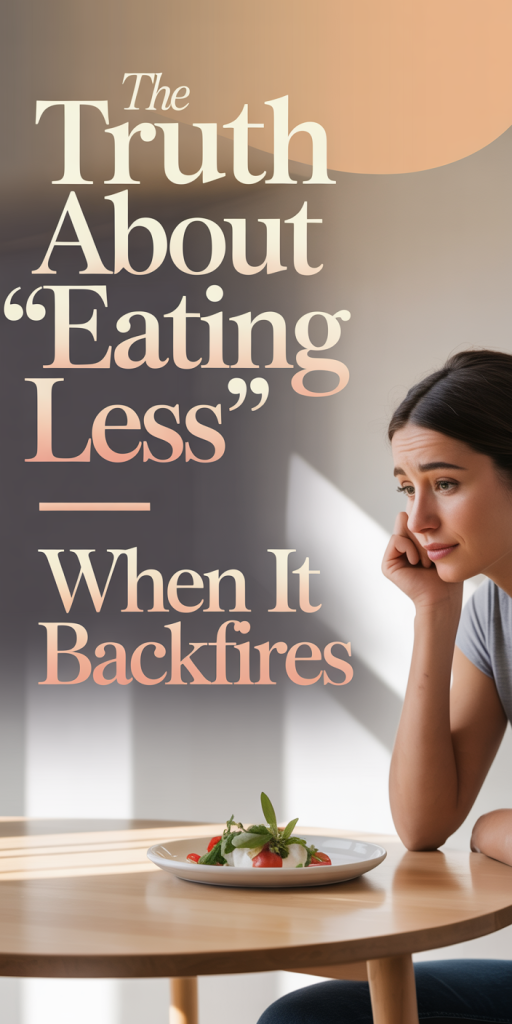
For decades the simple prescription for weight loss has been: eat less. It’s short, memorable, and feels actionable, so it stuck. But as we and many clinicians have observed, that advice often backfires. People who “just eat less” can lose muscle, slow their metabolism, develop intense food preoccupation, or end up heavier than before. In this text we’ll unpack why the eat-less message became popular, how chronic undereating affects the body and mind, who is most at risk, clear signs you’re eating too little, and, most importantly, practical, evidence-based alternatives that protect metabolism, mood, and long-term results. If you’re tired of quick fixes and want a realistic, sustainable path forward, read on.
Why The ‘Eat Less’ Message Became So Popular
The “eat less” message has a lot of cultural momentum. It’s rooted in a simplified energy-balance model, calories in versus calories out, and that model is not wrong in principle. Reduce intake, and body weight tends to fall. But the simplicity that made the message popular also masked complexity: not all calories behave the same in our biology and behavior: context matters, and human beings aren’t metabolic calculators.
Several forces helped the one-liner spread. The diet industry favors quick, easy messages that sell: “Cut calories and you’ll lose weight” translates into programs, pills, and cookbooks. Public health campaigns often default to concise slogans because they’re memorable, even when nuance is needed. Plus, clinical guidance focused on short-term weight loss rather than long-term metabolic health, so calorie-restriction became the default intervention for an expanding population of people concerned about weight.
We should also acknowledge social norms and body ideals. When thinness is conflated with health or moral virtue, people receive powerful social reinforcement for restricting food. That reinforcement can push otherwise healthy behavior into extremes.
Finally, there’s confirmation bias: someone loses weight quickly after cutting calories and assumes the approach is universally good. They share their story, it spreads, and we forget the many who rebound or develop negative consequences. That’s why we need to look beyond the slogan and consider physiology, psychology, and sustainability.
How Your Body Responds To Chronic Undereating
When we chronically eat fewer calories than our bodies require, several adaptive responses kick in. These responses are designed to protect us from starvation, useful evolutionarily, but problematic when they undermine our goals today.
First, hormonal shifts affect appetite and energy expenditure. Levels of ghrelin (the hunger hormone) typically rise, while leptin (the satiety hormone) falls. Thyroid hormones can downregulate, reducing basal metabolic rate. Cortisol may increase, promoting fat storage in certain contexts. Together, these changes make us hungrier, less satisfied after meals, and less likely to burn calories at rest.
Second, the body conserves energy by dialing back nonessential processes: spontaneous activity decreases (we fidget less, take fewer steps), and the sympathetic nervous system tone drops. Over weeks to months, resting metabolic rate (RMR) can decline, this is sometimes called metabolic adaptation or adaptive thermogenesis.
Third, if dietary protein and resistance training are insufficient, we lose muscle along with fat. Muscle loss further reduces RMR and leaves us with poorer strength and function.
Fourth, cognitive and emotional systems are affected. Persistent calorie restriction increases preoccupation with food, can worsen mood or anxiety, and makes dietary lapses more likely to spiral into binge episodes. In short, the body fights back in ways that reduce the effectiveness of simple calorie cutting.
Common Ways ‘Eating Less’ Backfires In Real Life
We see the eat-less approach misfire in predictable patterns. Here are the most common real-world scenarios:
- Rapid initial weight loss followed by plateau and eventual regain. People cut calories drastically and lose a lot at first. When metabolic adaptation and increased appetite set in, they can’t sustain the deficit. They regain weight, sometimes more than they started with.
- Binge–restrict cycles. Chronic restriction increases cravings and binge risk. Someone may adhere to low intake all week and then have a large episode on the weekend, canceling the deficit and creating guilt and shame.
- Performance decline. Athletes or active people who cut calories too far experience lost strength, poorer endurance, and slower recovery. That reduces overall energy expenditure and enjoyment of activity.
- Loss of muscle and physical function. Especially in older adults or those not prioritizing protein and resistance training, weight loss includes significant lean mass loss, leading to weakness and frailty over time.
- Psychological harm. Food preoccupation, anxiety around meals, and rigid rules can undermine social life and mental health. People may avoid dining with friends or become consumed by calorie counting.
- Metabolic consequences. Long-term undereating can lower resting metabolic rate and blunt the body’s responsiveness to future weight-loss efforts.
These backfires aren’t inevitable, but they’re common when the primary strategy is blunt calorie reduction without attention to quality, composition, activity, and sustainability.
Who Is Most At Risk For Negative Effects From Eating Less
Not everyone who reduces intake experiences harm, but certain groups are disproportionately at risk. We should pay extra attention when advising or supporting people in these categories:
- Teenagers and young adults. They’re still growing and need sufficient energy and nutrients for development. Restrictive eating during adolescence can disrupt growth, reproductive development, and mental health.
- New mothers and pregnant people. Caloric restriction can impair milk supply and postpartum recovery: pregnancy requires adequate calories and nutrients for fetal development.
- Older adults. Sarcopenia (age-related muscle loss) accelerates when energy or protein intake is too low: preserving lean mass is critical for independence.
- Athletes and highly active people. They need calories to fuel training, recover, and build/maintain muscle. Low energy availability leads to poor performance and increased injury risk.
- People with a history of eating disorders. Restrictive messages can trigger relapse or worsen disordered behaviors.
- People with medical conditions that affect metabolism (thyroid disease, certain chronic illnesses). Their responses to calorie changes may be atypical and require medical supervision.
- Individuals under significant stress or with limited food access. Stress alters appetite and hormonal responses: food insecurity complicates attempts at structured restriction and increases disordered eating risk.
When we encounter someone in these groups, a more cautious, individualized approach is warranted, preferably involving clinicians or registered dietitians.
Signs You’re Eating Too Little — Physical, Mental, And Behavioral Clues
We can often detect problematic restriction early by watching for a constellation of signs. These clues fall into physical, cognitive/emotional, and behavioral categories:
Physical signs
- Persistent fatigue, low energy, or poor recovery from exercise
- Hair thinning or loss, brittle nails, dry skin
- Irregular or absent menstrual cycles in people who menstruate
- Frequent cold intolerance, low body temperature, or slow wound healing
- Decline in athletic performance, dizziness, or fainting episodes
Cognitive and emotional signs
- Constant preoccupation with food, calories, or weight
- Anxiety or irritability around meals
- Mood swings, depression, or lack of pleasure in usual activities
- Dissatisfaction even though progress, or extreme guilt after eating
Behavioral signs
- Skipping social events that involve food
- Obsessive tracking of calories/macros to the detriment of life quality
- Rigid rules (e.g., only eating specific foods or forbidding whole food groups)
- Secretive eating or binge episodes following restriction
If several of these signs are present, we should take them seriously. They often indicate that the current approach is doing more harm than good and that a recalibrated plan, ideally with professional input, is needed.
Evidence-Based Reasons To Rethink Restrictive Eating
A growing body of research supports a more nuanced view than “eat less, lose weight, problem solved.” Key evidence-based reasons to rethink blunt restriction include:
- Metabolic adaptation reduces long-term efficacy. Studies following people after dieting show declines in resting metabolic rate that can persist beyond the period of restriction, making weight regain more likely.
- Lean mass loss is common without adequate protein and resistance training. Trials comparing higher vs. lower protein diets during weight loss consistently show better preservation of muscle with more protein.
- Psychological harm is measurable. Restrictive dieting is a predictor of future binge eating, body dissatisfaction, and eating disorder onset in vulnerable populations.
- Diet quality matters for cardiometabolic health. Two diets with identical calories can have very different effects on blood sugar, lipid profiles, inflammation, and hunger, so focusing only on calories misses important health outcomes.
- Sustainable behavior change beats short-term deficits. Interventions that emphasize gradual habit change, environment modification, and flexible eating show better adherence and longer-term maintenance in behavioral trials.
- Functional outcomes are critical. For many people, preserving strength, cognitive function, and quality of life should be prioritized over aggressive short-term weight loss.
Taken together, the evidence suggests we should favor approaches that protect metabolism, lean mass, and mental health while promoting long-term adherence and well-being.
Practical Alternatives To ‘Just Eat Less’
If the blunt “eat less” directive is flawed, what should we do instead? Here are practical, science-aligned strategies we can use to create sustainable change without triggering the backfire effects.
Set sustainable calorie targets
Rather than plunging into an extreme deficit, aim for modest, sustainable reductions tailored to your baseline. A deficit of 10–20% below maintenance often yields steady weight loss while minimizing hunger and metabolic adaptation. Working with a registered dietitian can help personalize targets based on activity, health conditions, and goals.
Prioritize protein, strength training, and sleep to protect metabolism
Protein preserves muscle during weight loss and increases satiety. We suggest a range (depending on activity and goals) of about 1.2–2.0 g/kg body weight per day, with the higher end for those doing regular resistance training. Pair this with regular strength training to signal the body to retain or build muscle. Don’t underestimate sleep, poor sleep reduces dietary restraint, alters hunger hormones, and impairs recovery.
Practice flexible eating, mindful meals, and reduce diet mentality
Rigid rules often backfire. Instead, practice flexible restraint: allow the occasional treat without guilt, focus on portion awareness rather than forbidden lists, and use mindful-eating techniques to tune into hunger and satiety cues. This reduces the psychological drivers of binge eating.
Improve diet quality and food timing
We can often lower caloric intake by increasing satiety per calorie, more vegetables, fiber, and protein, and by reducing liquid calories and highly processed snacks. Small adjustments (e.g., having a protein-rich breakfast, packing healthy snacks) can produce sizeable changes without drastic restriction.
Use activity strategically
Instead of endless cardio sessions to “earn” food, combine strength training to preserve muscle with moderate aerobic activity for cardiovascular health. Activity should be enjoyable and sustainable, exercise we like gets done consistently.
Seek professional support when needed
If you have medical issues, disordered eating history, or persistent failures with self-guided plans, consult a registered dietitian, therapist, or physician. They help tailor safe, effective approaches and can address underlying factors like sleep, stress, or hormonal issues.
These alternatives aim to balance results with health, avoiding the biological and psychological downsides that come from severe or prolonged restriction.
Conclusion
The simple slogan “eat less” carries an appealing clarity, but in practice it often misses the mark. Chronic or extreme calorie restriction can trigger hormonal changes, metabolic adaptation, muscle loss, and psychological distress, outcomes that undermine long-term health and weight outcomes. Instead of defaulting to blunt restriction, we recommend personalized, moderate strategies that protect metabolism and mental well-being: set sustainable calorie targets, prioritize protein and strength training, focus on diet quality, practice flexible eating, and seek professional guidance when appropriate.
Changing how we talk about food and weight matters. Shifting from moralizing messages to practical, evidence-based guidance helps people achieve results without sacrificing health or quality of life. We can do better than “just eat less.”
How Metabolism Adapts: Energy Balance, Hormones, And Appetite Signals
When we reduce calories, the body doesn’t sit idly by. It adjusts hormonal signals and energy expenditure to defend body weight. Leptin, produced by fat cells, falls as fat mass decreases and with acute caloric deficits, lower leptin increases hunger and reduces thyroid hormones. Ghrelin typically rises, pushing us to eat. Insulin sensitivity can improve initially but long-term restrictive patterns may complicate glucose handling in some individuals.
Physiologically, the body minimizes energy expenditure through reduced RMR and lowered non-exercise activity thermogenesis (NEAT). That means we may subconsciously move less, fidget less, and feel more lethargic, behaviors we often interpret as laziness but are actually biological adaptations.
Understanding these mechanisms reframes “failure” to maintain weight as an expected physiological response rather than a moral shortcoming. That’s why strategies that ignore hormones and behavior rarely succeed over the long term.
Muscle Loss, Resting Metabolic Rate, And Long-Term Weight Changes
Lean mass is metabolically active tissue. During energy restriction, especially with inadequate protein or no strength training, a significant portion of weight lost can be muscle. Losing muscle reduces RMR and limits functional ability. Over repeated dieting cycles, the cumulative loss of lean mass can make future weight management harder.
Research shows that weight-reduced individuals often have lower RMR than predicted for their body composition, this metabolic adaptation contributes to regain. The good news: we can blunt muscle loss by prioritizing dietary protein, evenly distributing it across meals, and engaging in progressive resistance training. These steps help keep RMR higher and improve long-term outcomes.
Psychological Consequences: Food Preoccupation, Binge Risks, And Mood
Severe or chronic restriction tends to increase food-related thoughts and can escalate to binge eating in susceptible people. The cycle often looks like intense restriction, rising cravings, an eventual loss of control, then shame and renewed restriction. Psychological research links dieting behaviors with increased risk of disordered eating and poorer body image.
Aside from binge risk, prolonged restriction can worsen mood, increase anxiety, and reduce enjoyment of social activities involving food. That’s not a minor side effect, quality of life is a central outcome we should prioritize. Interventions that include cognitive-behavioral strategies or intuitive-eating principles often produce healthier relationships with food and better psychological outcomes.
Undereating vs. Healthy Calorie Reduction: Key Differences
Undereating is extreme, unsustainable, and often imposed by rigid rules. Healthy calorie reduction is moderate, individualized, and paired with attention to nutrition, activity, and rest. Key differences include:
- Magnitude of deficit: Undereating uses large deficits: healthy plans use modest, sustainable ones.
- Nutrition quality: Undereating often lacks variety and protein: healthy plans ensure adequate macro- and micronutrients.
- Flexibility: Undereating is rigid: healthy approaches allow occasional treats and social flexibility.
- Focus on function: Healthy plans prioritize performance, mood, and long-term maintenance: undereating prioritizes rapid weight change.
Recognizing these differences helps us choose strategies that produce results without harm.
Typical Pitfalls: Overly Low Calories, Excessive Cardio, And Skipping Protein
Several common mistakes accelerate negative outcomes:
- Overly low calories: Eating far below maintenance creates rapid adaptation and increases relapse risk.
- Excessive cardio: Endless steady-state cardio without strength work burns muscle and increases hunger: it’s inefficient for long-term body composition goals.
- Skipping protein: Low protein intake accelerates muscle loss during weight loss and reduces satiety.
Addressing these pitfalls, by implementing moderate deficits, including resistance training, and ensuring adequate protein, prevents many of the backfire effects of simplistic dieting.
Real-World Examples: Yo-Yo Dieting And Rescue Behaviors
We commonly see cycles: someone loses weight on a crash plan, then gains it back after returning to previous eating patterns. This “yo-yo” dieting is linked with metabolic and psychological costs. Rescue behaviors, purging, overexercising, or returning to extreme restriction after a lapse, are attempts to regain control but often worsen outcomes.
Realistic case example: a 35-year-old office worker cuts to 1,200 kcal/day and loses 20 pounds quickly. Over months, energy plummets and workouts suffer. She has a weekend binge, gains five pounds, and responds by dropping to 900 kcal/day. Weeks later, she’s exhausted, hair is thinning, and she’s regained the initial weight, plus more. This pattern illustrates how short-term victories can slide into longer-term harm.
Life Stage And Context: Teenagers, New Mothers, Athletes, And Older Adults
Context changes how risk plays out. Teenagers need calories for growth and brain development: restrictive diets can harm maturation and mental health. New mothers require energy for recovery and lactation: underfeeding can impair milk supply and mood. Athletes, particularly those in weight-sensitive sports, need to avoid low energy availability to protect performance and hormones. Older adults face higher stakes from muscle loss: small caloric deficits without protein and resistance training can accelerate frailty.
When we tailor recommendations, we must account for life stage demands and the social/environmental context that determines feasibility and safety.
Medical And Mental-Health Red Flags That Warrant Professional Care
Certain signs require prompt professional attention:
- Very low or rapidly dropping body weight
- Amenorrhea (absent periods) or severe reproductive dysfunction
- Syncope, frequent dizziness, or dangerously low blood pressure
- Marked hair loss, electrolyte abnormalities, or fainting
- Severe depression, suicidal thoughts, or active disordered-eating behaviors
If these are present, we should seek medical evaluation and support from multidisciplinary teams, physicians, registered dietitians, and mental-health professionals, to ensure safe, effective care.
Physical Signs: Fatigue, Hair Loss, Irregular Periods, And Low Performance
Physical symptoms often alert us before lab values do. Persistent fatigue and decreased exercise performance are common early signs. Hair thinning, brittle nails, and dry skin suggest nutrient deficits. For menstruating people, irregular or absent cycles are an early warning of energy deficiency. If we notice these changes, it’s time to reassess intake, sleep, stress, and training load rather than pushing harder.
Cognitive And Emotional Signs: Obsessed Thoughts, Anxiety Around Meals, And Shame
Eating too little often coincides with intrusive thoughts about food, anxiety before eating, and shame after lapses. These mental patterns degrade quality of life and predict disordered behaviors. We should treat them as meaningful symptoms, not quirks. Psychological interventions, CBT, acceptance-based approaches, or working with eating-disorder specialists, can rebuild healthier eating patterns and reduce distress.
Short-Term Gains Vs. Long-Term Costs: What Research Shows
Clinical trials and observational studies show that aggressive short-term weight loss frequently leads to weight regain and sometimes worse metabolic outcomes later. The “weight set point” and adaptive thermogenesis make long-term maintenance challenging. Studies that prioritize lifestyle changes, muscle-preserving strategies, and modest deficits tend to report better maintenance. In other words: quick wins often cost more down the road: slower, sustainable approaches produce better long-term health.
Hormonal Effects: Leptin, Ghrelin, Thyroid Function, And Cortisol
Hormones mediate much of the body’s response to underfeeding. Leptin decreases, increasing hunger and lowering energy expenditure. Ghrelin increases, driving appetite. Thyroid hormones may fall, reducing metabolic rate. Cortisol often rises with chronic energy deficit and stress, promoting visceral fat storage and further appetite dysregulation. Recognizing these hormonal shifts helps explain why willpower alone isn’t enough and why physiologically informed strategies are necessary.
Metabolic Adaptation And Weight Regain: The Physiology Behind It
Metabolic adaptation is the body’s attempt to preserve energy stores during periods of reduced intake. Lower resting metabolic rate, reduced NEAT, hormonal shifts, and increased appetite all conspire to restore lost weight. When people return to previous eating patterns, the reduced RMR means calories that once maintained weight now produce gain. That’s why focusing solely on short-term calorie deficits without preserving lean mass and addressing hormones often ends in regain.
Set Sustainable Calorie Targets: How To Avoid Excessive Restriction
Practical steps to set sustainable targets:
- Estimate maintenance using multiple methods (activity logs, wearable data, or dietitian assessment) rather than guessing.
- Aim for a modest deficit (10–20%) to allow slow, steady progress and reduce hunger.
- Reassess frequently and adjust based on energy, performance, and body-composition goals.
- Build in diet breaks or periods of maintenance to mitigate adaptation.
Sustainability matters more than speed, small consistent changes beat dramatic short-term fixes.
Prioritize Protein, Strength Training, And Sleep To Protect Metabolism
To protect metabolism and preserve function:
- Eat adequate protein across meals (roughly 20–40 g per meal, adjusted for body size and activity).
- Perform progressive resistance training 2–4 times per week to maintain or grow muscle.
- Prioritize sleep (7–9 hours for most adults) since sleep deprivation alters hunger hormones and recovery.
These pillars support both health and body-composition goals and reduce the risk of backfire effects from calorie reduction.
Practice Flexible Eating, Mindful Meals, And Reduce Diet Mentality
Behavioral strategies to avoid a punitive diet mindset:
- Use flexible rules (e.g., include favorite foods in moderation) rather than absolute bans.
- Practice mindful eating, slow down, savor food, notice hunger/fullness cues.
- Reframe setbacks as data, not moral failures. Adjust plans based on what’s working.
These shifts reduce guilt and increase long-term adherence while improving enjoyment of life.
When To Seek Help: Dietitians, Therapists, And Medical Evaluation
We should seek professional support when:
- Signs of physiological harm appear (e.g., amenorrhea, fainting, severe fatigue).
- Disordered eating patterns or obsessive thoughts about food are present.
- Multiple prior attempts at self-guided dieting have failed or produced harm.
Registered dietitians can tailor nutrition plans that preserve metabolism and meet goals. Therapists can address the psychological drivers of restrictive behavior. Physicians evaluate for medical contributors (thyroid issues, electrolyte disturbances). Combining expertise delivers safer, more effective outcomes.
If we remember one thing: food and weight are complex. Simple slogans are easy to repeat but often fail to account for human biology and behavior. With thoughtful, evidence-based approaches we protect our bodies and minds while making meaningful progress toward our goals.
Want More From Nick?
Join The Health-First Fat Loss Club
✓ All 16+ Programs
✓ Private Community
✓ Weekly New Content
✓ Cancel Anytime
Nick Garcia
Health & Nutrition Expert · 15+ Years Experience