If you’re tired of crash diets, endless hunger, and the roller coaster of losing weight only to regain it, we hear you. In 2026 the science is clearer than ever: sustainable weight loss doesn’t require starvation, it requires sensible, evidence-based steps that reduce body fat while preserving energy, mood, and muscle. In this guide we’ll walk through why starving yourself fails long-term, realistic goal-setting, nutrition approaches that keep us full, practical eating strategies, effective movement, sleep and stress management, habit change, a sample week of meals, and troubleshooting. Our goal: a plan you can stick with, enjoy, and that fits real life.
Why Starvation Doesn’t Work Long-Term
We’ve all seen the dramatic “rapid weight loss” stories. What those plans rarely show is what happens next. Severe calorie restriction triggers a cascade of biological responses: our metabolic rate drops, appetite hormones like ghrelin rise, and we lose not just fat but lean muscle. That combination makes it harder to keep weight off and easier to regain it, often with interest.
Beyond the biology, extreme dieting damages our relationship with food. When we chronically deprive ourselves, small lapses become moral failures, and the psychological rebound can be intense: bingeing, all-or-nothing thinking, and chronic stress.
Research consistently shows that moderate, sustained changes outperform extreme short-term restriction for long-term weight maintenance. That’s because sustainable approaches protect metabolism, preserve muscle, keep hunger manageable, and integrate with day-to-day living. In short: starving yourself may produce quick results, but it’s a poor investment for lasting health and body composition.
Set Realistic, Healthy Weight-Loss Goals
Before changing meals or exercise, we set goals that align with physiology and life. Unrealistic targets set us up to fail. Here’s how to frame goals that work.
- Aim for modest weekly progress. A sustainable rate is roughly 0.5–1% of body weight per week for most people, commonly 0.5–2 pounds (0.25–1 kg) weekly depending on starting weight. Faster loss often means muscle loss and rebound risk.
- Focus on body composition and function, not just the scale. Improvements in energy, sleep, clothes fit, endurance, or strength are meaningful wins that keep motivation up.
- Set process goals as well as outcome goals. Examples: “We’ll plan and pack lunches five days this week,” or “We’ll strength train twice weekly.” Process goals give control and build momentum.
- Build in realistic timelines. Losing 10% of body weight might take months, and that’s okay. Sustainability matters more than speed.
- Use small checkpoints. Monthly or biweekly reviews let us adjust without panic. If progress stalls, we troubleshoot rather than double down on harmfully low calories.
When goals are realistic and anchored to behavior and health, we’re likelier to persist. That’s how small wins accumulate into lasting change.
Nutrition Principles That Prevent Hunger While Promoting Fat Loss
The fat-loss equation is energy in versus energy out, but how we manipulate that equation matters tremendously for hunger, mood, and metabolic health. These nutrition principles help us lose fat without feeling constantly hungry.
Choose Satiating Macronutrients
Protein is our ally. It’s the most filling macronutrient, preserves lean mass during weight loss, and has a higher thermic effect (we expend more energy digesting it). Aim for a target range, roughly 0.6–1.0 grams per pound of body weight (1.3–2.2 g/kg) depending on activity and goals, and distribute protein across meals.
Healthy fats are essential for hormones, taste satisfaction, and satiety. We don’t demonize fat: we prioritize unsaturated fats (olive oil, nuts, seeds, avocado) and keep portions mindful because fats are calorie-dense.
Carbohydrates deserve context: they’re valuable for performance and mood. We emphasize whole-food carbs with fiber (whole grains, legumes, fruit, starchy veggies) that fill us up longer and stabilize blood sugar.
Use High-Volume, Low-Calorie Foods (Volumetrics)
Volumetrics is a simple idea: choose foods high in water and fiber to feel full on fewer calories. Examples include vegetables, broth-based soups, salads, berries, and low-fat Greek yogurt. A big salad with colorful vegetables, a lean protein, and a modest dressing can be more filling than a small portion of calorie-dense food.
Practical tip: make half your plate vegetables or salad. It increases meal size and reduces the appetite for higher-calorie components without deprivation.
Balance Meal Timing Without Obsessing Over Calories
Meal timing isn’t a magic bullet: what matters most is total intake and quality over time. That said, consistent meals with protein and fiber help reduce late-day overeating. We recommend regular meals and snacks when they fit our life, for some that’s three meals, for others it’s smaller meals + snacks. Intermittent fasting can work for some people, but it’s optional and shouldn’t force us into extreme restriction.
Avoid rigid calorie counting if it triggers obsession. Instead, pair rough portion awareness with the principles above: protein every meal, vegetables to fill plates, and mindful portions of fats and carbs. That approach prevents hunger while promoting gradual fat loss.
Smart Eating Strategies For Everyday Life
We don’t live in a lab: sustainable plans must work around meetings, family dinners, and travel. These practical strategies help us reduce overeating and keep hunger in check.
Portion and Plate Methods That Reduce Overeating
Use simple visual cues instead of scales: protein = palm-sized portion, carbs = cupped hand, fats = thumb size, vegetables = two fists. Plate models also work: half vegetables, a quarter protein, a quarter whole grains/starchy vegetables. These rules are quick, flexible, and teach portion sense without being punitive.
We also recommend using smaller plates when possible, it’s a small environmental nudge that consistently reduces portions. Pre-portioning snacks into small containers prevents the “eat from the bag” trap.
Mindful Eating and Managing Cravings
Mindful eating helps us notice hunger and fullness cues. Simple practices: eat without screens, take three breaths before starting, chew slowly, and pause halfway to check satiety. Cravings often pass in 10–20 minutes: delaying or redirecting can break the cycle.
For cravings we don’t ban treats, restriction fuels desire. Instead, plan small, satisfying portions of favorite foods so we can enjoy them without derailing progress. Pairing sweets with protein or fiber (like fruit with yogurt) reduces the blood-sugar spike and extends satisfaction.
Meal Prep, Convenience, and Smart Snacking
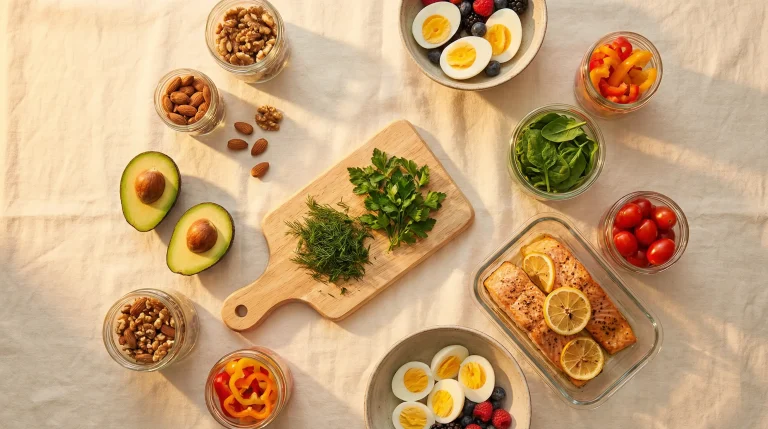
Convenience beats perfection. Batch-cook proteins, chop vegetables, and have go-to balanced snacks (hard-boiled eggs, Greek yogurt, hummus + veggie sticks, mixed nuts). When life gets hectic, these options prevent impulsive, calorie-dense choices.
We also build “rescue meals”, simple templates (protein + vegetable + whole grain) that can be assembled in 10–15 minutes. That keeps us consistent even on busy days.
Move More: Exercise Strategies That Support Weight Loss Without Extreme Cardio
Exercise is not the sole key to weight loss, but it’s crucial for preserving muscle, improving metabolism, and supporting mental health. We don’t have to live on the treadmill to see results. Here’s how to make movement sustainable and effective.
Increase NEAT (Non-Exercise Activity Thermogenesis) Daily
NEAT includes everyday activities like walking, standing, fidgeting, and household chores, and it significantly impacts daily energy expenditure. Small changes compound: take the stairs, walk while on calls, park farther away, and stand or use a sit-stand desk. We aim for more movement across the day rather than one long sweat session alone.
Strength Training To Preserve Muscle And Boost Metabolism
Preserving lean mass is critical during weight loss. Strength training 2–4 times weekly maintains muscle and can even increase resting metabolic rate. Focus on compound movements (squats, deadlifts, rows, presses) and progressive overload, add reps, sets, or load gradually. Strength work also improves posture, function, and confidence.
Flexible Cardio: Efficient, Sustainable Options
Cardio helps create an energy deficit and supports cardiovascular health, but it doesn’t need to be extreme. High-intensity interval training (HIIT) can be time-efficient, while moderate-intensity steady-state (walking, cycling) is highly sustainable. We recommend mixing modalities: regular brisk walking for daily movement, a couple of strength sessions, and 1–2 cardio sessions weekly depending on preference. The best cardio is the one you’ll actually do consistently.
Sleep, Stress, And Medical Factors That Affect Hunger And Weight
Biology doesn’t sleep when our schedules are chaotic. Sleep, stress, and medical factors dramatically influence hunger hormones, food choices, and weight regulation. Ignoring them undermines even the best diet.
Optimize Sleep To Control Appetite Hormones
Short or poor-quality sleep increases ghrelin (hunger hormone) and reduces leptin (satiety hormone), making high-calorie food more tempting. We aim for 7–9 hours of consistent sleep per night. Practical steps: set a wind-down routine, limit evening screens, reduce caffeine after mid-afternoon, and prioritize a dark, cool bedroom.
Manage Stress, Emotional Eating, And Triggers
Chronic stress elevates cortisol, which can increase appetite and preference for energy-dense foods. We build stress-management strategies that actually fit our lives: short breathing breaks, walking outside, micro-meditations, or a quick call to a friend. When emotional eating is an issue, we map triggers (time of day, feelings, situations) and create alternative coping actions.
When To Seek Medical Advice (Hormones, Medications, Underlying Conditions)
If weight loss is unusually difficult even though consistent effort, or if you have symptoms like irregular periods, fatigue, or unexpected weight changes, seek medical evaluation. Conditions like hypothyroidism, polycystic ovary syndrome (PCOS), or certain medications can affect weight and appetite. A clinician can run appropriate tests and adjust medications or provide referrals to dietitians and specialists. Medical oversight helps us tailor strategies safely and effectively.
Behavior Change: Build Habits That Stick Without Feeling Deprived
Knowing what to do is different from doing it consistently. Behavior change science gives us tools to create long-lasting habits without harsh willpower.
Small Habit Stacking And Goal Setting
We prefer tiny, specific habits that stack onto existing routines. Instead of “eat healthier,” try “after we brush our teeth, we pack lunch for work.” Habit stacking makes new behaviors automatic faster. Start small: two weeks of one new habit, then add another.
Use implementation intentions: a simple if-then plan (If X happens, then we’ll do Y). For example: “If we’re out with friends, then we’ll order a grilled protein and a side salad.” These plans reduce decision fatigue and increase follow-through.
Tracking Progress Without Obsession (Metrics That Matter)
Tracking helps us learn what works, but obsession is counterproductive. We recommend a balanced approach: weekly weigh-ins or body measurements, strength/progression logs, and notes on energy, sleep, and mood. Photos every 4–6 weeks can show non-scale progress. If tracking induces anxiety, choose fewer metrics and focus on habits instead.
Social Support, Environment Design, And Accountability
Design your environment to make the healthy choice the easy choice: visible fruit bowl, pre-chopped vegetables, and out-of-sight treats. Tell supportive friends or join a small accountability group, sharing progress helps. If we struggle with self-directed behavior change, working with a coach or registered dietitian provides structure and personalized feedback.
Behavior change isn’t glamorous: it’s incremental. With repetition, rewards, and the right environment, habits become the path of least resistance rather than constant struggle.
Sample 1-Week Meal Plan And Snack Ideas (Balanced, Filling, Flexible)
A sample week shows how these principles translate to everyday eating. We focus on balanced meals with protein, fiber, and volume. Portions should be adjusted to individual needs.
Easy Breakfasts, Lunches, Dinners, And Snacks That Keep You Full
Day 1
- Breakfast: Greek yogurt parfait with berries, a sprinkle of granola, and chopped nuts.
- Lunch: Big mixed salad (greens, cherry tomatoes, cucumber, chickpeas), grilled chicken, olive oil + lemon.
- Dinner: Baked salmon, roasted Brussels sprouts, small sweet potato.
- Snacks: Apple + 1 tbsp almond butter: carrot sticks and hummus.
Day 2
- Breakfast: Overnight oats made with milk, chia seeds, and banana.
- Lunch: Turkey wrap with whole-grain tortilla, spinach, avocado, and salsa.
- Dinner: Stir-fry with tofu, mixed vegetables, and brown rice.
- Snacks: Cottage cheese with pineapple: handful of mixed nuts.
Day 3
- Breakfast: Vegetable omelet with spinach, mushrooms, and salsa.
- Lunch: Lentil soup and side salad.
- Dinner: Grilled chicken kebabs, quinoa, roasted vegetables.
- Snacks: Greek yogurt: bell pepper slices with guacamole.
(Adjust remaining days similarly: mix fish, poultry, legumes, eggs: two vegetable-heavy meals per day: whole grains and modest starchy carbs around activity.)
Simple Swaps And Recipe Templates To Reduce Calories Without Sacrifice
- Swap creamy dressings for vinaigrettes or yogurt-based versions.
- Swap half the pasta for zucchini noodles or spaghetti squash in mixed dishes.
- Use mashed cauliflower blended with a little butter and garlic as a lower-calorie side vs. mashed potatoes.
- Make burrito bowls instead of burritos, same flavors, less refined-carb wrap.
Templates we use often: protein + large salad + small whole grain: grain bowl with beans, roasted veg, and tahini drizzle: breakfast scramble with eggs, greens, and a slice of whole-grain toast. These are flexible, quick, and satisfy our appetite.
Troubleshooting Common Roadblocks
Even well-designed plans run into friction. Here’s practical troubleshooting for the most common obstacles.
Breaking Plateaus And Adjusting Intake Sensibly
Plateaus happen. Our first move is not to crash-diet but to audit: Are we tracking accurately? Has activity decreased? Are portion sizes creeping up? We may reduce calories slightly (100–200 kcal/day), increase NEAT, or add an extra strength session. If plateaus persist, cycle intake with a short maintenance phase to reset hunger and energy before trying another modest deficit.
Avoid repeated rate increases of extreme restriction: it harms metabolism and mood. Patience and measured adjustments win.
Handling Social Eating, Travel, And Special Occasions
Plan and be flexible. Look at menus ahead of time, choose protein and veg-rich options, and allow room for enjoyable foods. When traveling, pack portable snacks, prioritize protein-rich breakfasts, and use active sightseeing as movement. For special occasions, we enjoy the event without trying to be perfect, small, intentional choices keep us on track without missing life.
A key mindset: one meal won’t ruin progress: a return to routine the next day matters far more.
Conclusion
Learning how to lose weight without starving yourself means shifting from punishment to strategy. We combine sensible calorie reductions with high-protein meals, high-volume foods, strength training, increased daily movement, optimized sleep, and behavior change tools that fit our lives. The result is steady fat loss with preserved energy, mood, and muscle, and habits we can keep.
If we start small, measure what matters, and troubleshoot patiently, sustainable progress follows. Let’s choose a plan that nourishes us, not one that empties us, and build a healthier life we can actually enjoy long term.