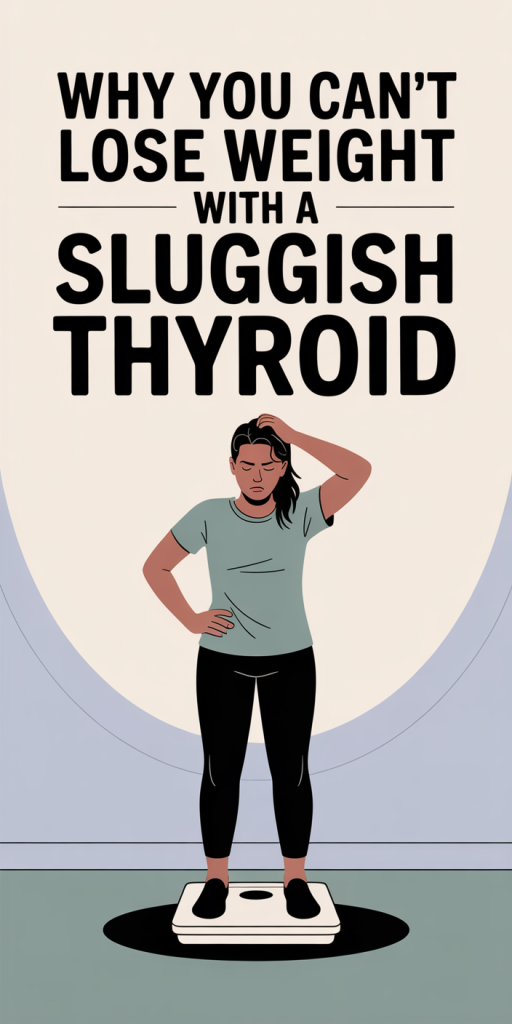
If you’re doing everything “right”, eating less, moving more, counting calories, and still not losing weight, an underactive thyroid (often called a sluggish thyroid) could be the missing piece. In 2026, we have better tools and clearer evidence about how thyroid dysfunction interferes with metabolism and body composition. This guide explains why weight loss stalls when the thyroid is underactive, how to diagnose the problem properly, and what evidence-based steps we can take to restore metabolism and make weight loss possible again. We’ll cover testing, treatments (including what works and what doesn’t), lifestyle strategies, and a practical 12-week plan you can start using with your clinician’s guidance.
How The Thyroid Controls Metabolism And Body Weight
How Thyroid Hormones Affect Basal Metabolic Rate
The thyroid gland produces hormones, primarily thyroxine (T4) and triiodothyronine (T3), that act like a thermostat for our cells. T3 is the more active hormone at the cellular level: it binds to nuclear receptors and upregulates genes involved in energy production, mitochondrial activity, and oxygen consumption. When circulating T3 falls, basal metabolic rate (BMR) drops. A lower BMR means our bodies burn fewer calories at rest, so the same food intake produces a slower weight-loss response.
Clinically meaningful changes in BMR can be subtle yet impactful: even a 5–10% reduction in daily energy expenditure, sustained over weeks or months, leads to measurable weight gain or makes weight loss much harder. That’s why we often see patients who’ve reduced calories and increased activity but still plateau.
Effects On Appetite, Thermogenesis, And Fat Storage
Thyroid hormones influence appetite-regulating centers in the hypothalamus and alter the signaling of leptin and ghrelin. In hypothyroidism, appetite can be blunted for some people and unchanged or even increased in others, but the real issue is thermogenesis. Less thyroid activity reduces non-shivering thermogenesis (heat production in brown fat and skeletal muscle), so we expend fewer calories on day-to-day temperature regulation.
On top of that, low thyroid function favors fat storage. Adipocytes become more efficient at storing triglycerides and less responsive to lipolytic signals from catecholamines. Combined with reduced thermogenesis and low BMR, the net effect is an environment where calories are conserved rather than burned.
Interactions With Other Hormones (Insulin, Cortisol, Sex Hormones)
Thyroid dysfunction rarely acts alone. Insulin sensitivity often worsens with hypothyroidism, increasing the tendency to store glucose as fat. Cortisol dynamics change too: chronic hypothyroidism can raise baseline cortisol or blunt diurnal variation, which compounds central fat accumulation. Finally, sex hormones are affected, women may experience altered estrogen and progesterone balance, impacting where fat is stored and how the body responds to exercise.
These interactions mean that treating thyroid dysfunction often improves broader hormonal balance, which in turn helps with weight and metabolic health. We have to consider the hormonal milieu, not just the thyroid numbers, when addressing weight issues.
Common Causes And Symptoms Of A Sluggish Thyroid
Primary Hypothyroidism Versus Subclinical And Central Causes
Primary hypothyroidism originates in the thyroid gland itself, the most common cause is autoimmune destruction (Hashimoto’s thyroiditis). Subclinical hypothyroidism refers to elevated TSH with normal free T4 and often minimal or nonspecific symptoms: it can progress to overt hypothyroidism. Central (secondary or tertiary) hypothyroidism is due to pituitary or hypothalamic dysfunction, where TSH can be low or inappropriately normal even though low thyroid hormones.
Differentiating these types matters because treatment and monitoring differ. Primary disease typically responds to levothyroxine replacement, while central causes require careful endocrine evaluation for other pituitary hormone deficiencies.
Typical Signs You Might Be Overlooking (Fatigue, Cold Intolerance, Brain Fog, Constipation)
Weight gain is often the most visible complaint, but many symptoms are subtle and get blamed on aging, stress, or mood:
- Fatigue and low exercise tolerance
- Cold intolerance and decreased sweating
- Brain fog, slowed thinking, or memory slips
- Constipation and bloating
- Dry skin, brittle nails, and hair thinning
- Menstrual irregularities or heavier periods
We frequently see patients who have lived with these symptoms for years and normalized them, but they’re classic signs that should prompt testing.
Risk Factors And Triggers (Autoimmunity, Iodine, Medications, Past Treatments)
Risk factors include:
- Autoimmune disease (personal or family history)
- Female sex and age over 50 (though younger people can be affected)
- Prior radioactive iodine therapy or thyroid surgery
- Certain medications: amiodarone, lithium, interferon, tyrosine kinase inhibitors
- Iodine deficiency or excess (both can disrupt function)
- Radiation to the neck or prior head/neck cancer treatment
We should ask about these explicitly during evaluation because they change pre-test probability and alert us to potential complications.
Why Diet And Exercise Often Fail When The Thyroid Is Underactive
Reduced Energy Expenditure And Exercise Tolerance
When thyroid hormone is low, everything feels harder. Exercise capacity drops because of lower mitochondrial activity and decreased muscle efficiency. Patients report slower recovery, breathlessness at usual workloads, and a sense that “the same workout doesn’t burn as much.” That’s not just perception: total daily energy expenditure declines, so a program that used to create a calorie deficit no longer does.
Muscle Loss, Water Retention, And Body Composition Changes
Hypothyroidism shifts body composition away from metabolically active lean mass toward increased fat mass and extracellular water. Muscle protein synthesis slows, and patients lose strength faster than expected. That means the scale can stay flat even as we reduce fat because muscle loss and water retention obscure fat changes. Focus on body composition, not just weight, becomes crucial.
How Misdiagnosis Or Incomplete Treatment Sabotages Weight Loss Efforts
Misdiagnosis is common. Providers sometimes treat to normalize TSH alone, ignore persistent symptoms, or miss low free T3 and elevated reverse T3 patterns. Others attribute weight issues entirely to poor diet or lack of willpower. The result: people chase restrictive diets and intense exercise that leave them exhausted, further lowering metabolic rate and reinforcing a cycle of failure.
Incomplete treatment (wrong dose, incorrect formulation, or ignoring coexisting conditions like adrenal dysfunction or sleep apnea) will blunt improvements even after therapy starts. That’s why a careful, symptom-driven, and lab-backed approach matters.
Diagnosing Thyroid-Related Weight Problems Correctly
Which Blood Tests Matter (TSH, Free T4, Free T3, Reverse T3, Antibodies)
A basic thyroid panel should include TSH and free T4. But for patients with weight problems and persistent symptoms, we should consider a fuller panel:
- TSH, first-line screening
- Free T4, indicator of circulating prohormone
- Free T3, active hormone at tissue level: can be low even with normal TSH/T4
- Reverse T3, an inactive metabolite that can rise in illness or stress and block T3 action
- Thyroid peroxidase (TPO) and thyroglobulin antibodies, to detect autoimmune thyroiditis
This more comprehensive testing helps us catch patterns like low free T3 with normal TSH (a common scenario in chronic illness or after aggressive calorie restriction).
Limitations Of Standard Testing And When To Order Advanced Panels
Standard TSH-first testing misses several clinically important scenarios: central hypothyroidism, tissue-level hypothyroidism, and euthyroid sick syndrome. We should order advanced panels when:
- Symptoms strongly suggest thyroid dysfunction even though normal TSH
- The patient has autoimmune disease or prior thyroid surgery/radiation
- There is a poor response to standard levothyroxine therapy
We also need to interpret labs in context, acute illness, pregnancy, and medications can skew results.
Interpreting Results In The Context Of Symptoms And Medications
Lab numbers don’t live in a vacuum. A mildly elevated TSH with clear symptoms may warrant treatment, especially if antibodies are present. Conversely, a slightly high TSH in an asymptomatic older adult may not require immediate therapy.
Medications such as glucocorticoids, dopamine agonists, and high-dose biotin can alter results: biotin, for example, can cause falsely abnormal assays. We always review medication lists and timing of blood draws relative to thyroid dosing, levothyroxine should generally be checked at least 4–6 hours after ingestion for accurate levels.
Evidence-Based Treatment Options To Restore Metabolism
Thyroid Hormone Replacement: Levothyroxine, Combination Therapy, And Dosing Principles
Levothyroxine (T4) is the standard first-line therapy for primary hypothyroidism because it’s stable, predictable, and converts to T3 peripherally. Our goals are symptom resolution and lab normalization. Typical starting doses vary by age, cardiac risk, and severity: many adults start 25–50 mcg/day and titrate every 6–8 weeks guided by TSH and symptoms.
Some patients continue to feel symptomatic even though normalized TSH. For them, combination therapy (T4 plus liothyronine, T3) or desiccated thyroid extract can be considered carefully. Evidence is mixed: randomized trials show modest, inconsistent benefits, but select patients report meaningful symptom improvement on combination therapy. If we choose combination therapy, we use low, titrated T3 doses and monitor closely for palpitations, bone loss, and cardiac issues.
We also consider timing (take levothyroxine on an empty stomach), interactions with calcium or iron supplements, and the need to adjust dosing in pregnancy.
Monitoring Response: Symptoms, Labs, And Adjusting Treatment
Monitoring involves both labs and patient-reported outcomes. Reassess 6–8 weeks after dose changes and sooner if symptoms suggest over- or under-treatment. Track:
- TSH and free T4 (and free T3 if clinically indicated)
- Symptom scales for energy, cognition, and temperature sensitivity
- Heart rate, blood pressure, and bone health in long-term therapy
If symptoms persist with “normal” labs, revisit adherence, absorption issues (celiac disease, H. pylori), drug interactions, and non-thyroid causes such as sleep apnea or depression.
Adjunct Medical Options And When To Refer To An Endocrinologist
Adjunct options include treating coexisting conditions that impair weight loss: insulin resistance, sleep disorders, or adrenal dysfunction. Pharmacologic weight-loss agents (GLP-1 receptor agonists like semaglutide) can be considered alongside stable thyroid therapy when indicated and under specialist guidance. We refer to an endocrinologist when:
- Diagnosis is unclear (discordant labs and symptoms)
- Central hypothyroidism or pituitary disease is suspected
- Patients have complex comorbidities or don’t respond to standard therapy
Specialists can order dynamic testing, adjust combination therapy, and evaluate for rarer causes.
Lifestyle And Nutritional Strategies To Support Thyroid Function And Weight Loss
Nutrition: Protein, Carbohydrates, Fiber, Timing, And Key Nutrients (Selenium, Zinc, Iodine, Vitamin D)
Diet won’t fix untreated hypothyroidism, but it supports recovery and weight-loss efforts once thyroid function is addressed. Practical nutrition guidance:
- Prioritize protein (0.7–1.0 g per lb of lean body mass) to preserve muscle during caloric deficits.
- Favor complex carbohydrates and fiber to stabilize blood sugar and appetite.
- Time carbohydrates around activity to support performance without excess.
- Avoid very low-calorie diets for prolonged periods, they can suppress T3 and reverse thyroid adaptation.
Key nutrients:
- Selenium: supports T4-to-T3 conversion and may reduce autoimmune antibody levels in some people. 100–200 mcg/day from diet or supplements is common but don’t exceed recommended upper limits without monitoring.
- Zinc: required for thyroid hormone synthesis and receptor function.
- Iodine: essential but a narrow therapeutic window, deficiency causes hypothyroidism, but excess can provoke or worsen autoimmunity.
- Vitamin D: low levels correlate with autoimmune thyroid disease: repletion often helps overall immune function.
We recommend food-first approaches (seafood, Brazil nuts in moderation, lean protein, legumes, fortified dairy) and targeted supplementation when deficiency is confirmed.
Exercise Prescription: Strength Training, Low-Impact Cardio, And Progression For Low-Energy Patients
Exercise should rebuild muscle and raise metabolic rate without causing burnout. A sensible plan:
- Strength training 2–3x/week focusing on compound movements to preserve lean mass.
- Low-impact cardio (walking, cycling, swimming) to increase activity without overstressing joints or the nervous system.
- Gradual progression: start with short sessions (10–15 minutes) and increase volume by ~10% per week as tolerance improves.
We prioritize resistance work early because increasing muscle mass helps long-term energy expenditure and metabolic health.
Sleep, Stress Management, And Gut Health: Small Changes With Big Effects
Sleep deprivation and chronic stress both impair thyroid hormone conversion and promote weight gain via cortisol and appetite pathways. Interventions with outsized returns:
- Aim for consistent sleep timing and 7–9 hours per night.
- Use brief mindfulness, breathing exercises, or structured stress-reduction practices to blunt chronic HPA-axis activation.
- Address gut health: constipation and dysbiosis can affect enterohepatic circulation of thyroid hormones. Treat SIBO, manage fiber intake, and replete deficiencies that affect absorption.
These measures won’t replace hormone therapy when needed, but they amplify treatment response and make weight loss more sustainable.
Practical Weight-Loss Plan For People With Sluggish Thyroid
Step-By-Step 12-Week Framework (Assessment, Medical Stabilization, Diet, Movement, Monitoring)
Weeks 0–2: Assessment and baseline
- Comprehensive history, medication review, and symptom inventory.
- Baseline labs: TSH, free T4, free T3, reverse T3 (if indicated), TPO antibodies, vitamin D, ferritin, and fasting glucose/HbA1c.
- Measure weight, waist circumference, and baseline strength (e.g., number of push-ups or timed sit-to-stands).
Weeks 2–6: Medical stabilization
- Start or adjust thyroid replacement per clinician guidance and educate on proper administration.
- Begin gentle movement program and prioritize sleep hygiene.
- Nutrition focus: maintain modest calorie deficit (200–400 kcal/day) emphasizing protein and quality carbohydrates.
Weeks 6–12: Build capacity and monitor response
- Increase resistance work progressively and add short aerobic sessions.
- Reassess labs 6–8 weeks after hormone adjustments.
- Track symptoms, energy, and functional measures rather than fixating on scale changes.
By week 12 we expect improved energy, better exercise tolerance, and modest to meaningful changes in body composition if hormones are stabilized. Remember: some weight change may lag behind functional gains.
Tools And Metrics To Track Progress Beyond The Scale (Body Composition, Strength, Energy, Labs)
Use multiple metrics:
- Body composition (DEXA or bioimpedance) to track fat vs. lean mass
- Strength: progressive overload, increased reps or load on major lifts
- Energy and symptom logs (daily or weekly) to capture cognitive and temperature changes
- Labs: TSH and free T4, plus free T3 if symptomatic, repeated per treatment changes
These measures tell a richer story than the scale alone and help us adjust interventions more intelligently.
When Weight Loss May Be Slow, How To Stay Motivated And Know It’s Working
Expect slower-than-average weight loss early on, that’s normal when restoring thyroid function and rebuilding muscle. Celebrate wins that indicate metabolic restoration: improved sleep, less brain fog, better exercise recovery, smaller waist, clothes fitting differently, and rising strength numbers.
Set process goals (consistent medication timing, three workouts per week, protein intake targets) rather than only outcome goals. Tracking non-scale victories keeps motivation steady while the body recalibrates.
When To Seek Specialist Care And Red Flags
Signs You Need An Endocrinologist, Specialist Testing, Or Medication Changes
Seek specialist input if:
- Labs are discordant with symptoms (e.g., normal TSH but clear hypothyroid symptoms)
- You have central hypothyroidism or pituitary disease signs (visual changes, other pituitary hormone deficits)
- You’re symptomatic even though optimized levothyroxine and appropriate adherence
- You require combination therapy consideration or complex dosing strategies
Endocrinologists can provide dynamic testing, adjust therapies such as combination T4/T3, and evaluate for rarer causes.
Red Flags That Require Urgent Evaluation (Rapid Weight Gain, Chest Pain, Severe Fatigue)
Seek urgent care for:
- Rapid unexplained weight gain over days to weeks (could indicate fluid overload, heart or kidney issues)
- Chest pain, syncope, or severe palpitations (could signal cardiac complications)
- Profound new weakness, severe shortness of breath, or rapidly deteriorating mental status
While hypothyroidism typically progresses slowly, these symptoms may indicate complications or other acute illnesses needing immediate attention.
Resources And Questions To Bring To Your Clinician
Prepare a concise, prioritized list to make appointments efficient. Useful items to bring:
- Symptom timeline and medication list (include supplements)
- Recent labs and prior thyroid tests if available
- A short list of goals (eg: improve energy, lose 10–15 pounds, return to strength training)
Questions to ask:
- Which thyroid tests do you recommend and why?
- What are the pros and cons of levothyroxine alone vs combination therapy in my case?
- How will we monitor symptoms and labs, and when should I expect to feel better?
Being informed and collaborative with your clinician speeds correct diagnosis and effective treatment.
Conclusion
A sluggish thyroid is a common, often under-recognized barrier to weight loss. The good news is that with proper testing, individualized treatment, and supportive lifestyle changes, we can restore metabolic function and make sustainable weight loss achievable. Our approach should be methodical: diagnose correctly, treat appropriately, and track multiple outcomes beyond the scale. If you suspect thyroid-related weight problems, start with a thorough evaluation and partner with a clinician who will listen to symptoms as well as labs. Over time, small, consistent adjustments, from the right medication to progressive strength training and nutrient-focused eating, add up to meaningful improvements in weight, energy, and quality of life.
Want More From Nick?
Join The Health-First Fat Loss Club
✓ All 16+ Programs
✓ Private Community
✓ Weekly New Content
✓ Cancel Anytime
Nick Garcia
Health & Nutrition Expert · 15+ Years Experience