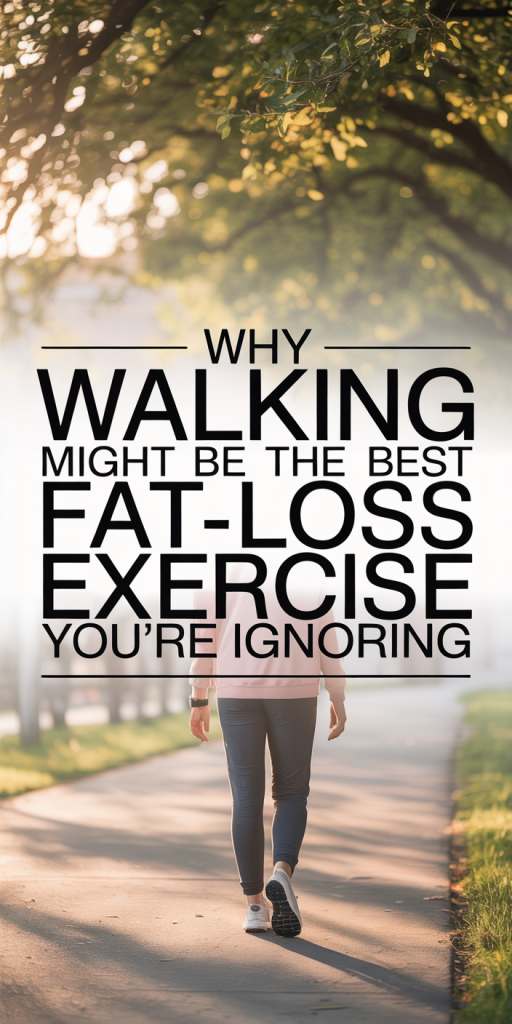
We’ve all chased the latest workout craze: HIIT, kettlebells, spin classes. But what if the simplest tool for reliable, sustainable fat loss is the one most of us already own, our two feet? In this text we break down why walking deserves a central place in your fat-loss strategy, the physiology that makes it effective, how to design a progressive 12-week plan, and the lifestyle habits that help walking produce real, lasting results. Expect science-backed explanations, practical progressions for all levels, and troubleshooting tips so you can stop guessing and start moving with purpose.
The Case For Walking: Why It’s More Powerful Than You Think
Metabolic And Health Benefits Of Regular Walking
Walking is often underrated because it’s low-tech and low-glamour. Yet regular walking improves glucose regulation, increases insulin sensitivity, reduces blood pressure, and improves lipid profiles. Over weeks and months these shifts support improved metabolic health that favors fat loss. A brisk 30–60 minute walk elevates energy expenditure, enhances post-meal glucose clearance, and stimulates mitochondrial health in skeletal muscle, key for sustained metabolic function.
We also see evidence that walking lowers systemic inflammation markers and enhances mood via endorphin and serotonin pathways. Those mental-health benefits matter: when we feel better, we’re more likely to maintain good habits and avoid stress-driven eating.
Sustainability, Accessibility, And Low Injury Risk
One reason walking outperforms flashier options is adherence. It’s accessible, no gym membership, minimal equipment, and extremely low skill requirement. Injury risk is much lower compared with running or plyometrics, so we can accumulate consistent weekly volume without frequent setbacks.
Because walking is easily integrated into daily life, commute, errands, meetings, it’s a behavior people are more likely to sustain for months and years. For fat-loss success, consistency beats intensity every time.
How Walking Fits Into Daily NEAT And Long-Term Adherence
Beyond dedicated exercise sessions, walking is the simplest way to boost NEAT (non-exercise activity thermogenesis). NEAT includes fidgeting, walking to the store, or standing more. Small increases in daily steps can meaningfully raise total daily energy expenditure. We often forget that adding 2,000–3,000 steps per day over baseline can burn an extra 100–200 calories, enough to tilt the energy balance for fat loss when paired with reasonable nutrition.
We’ll return to practical ways to boost NEAT and lock in long-term adherence, but the important point here is that walking compounds. It’s a low-risk, high-consistency habit that stacks over time.
How Walking Burns Fat: The Physiology Explained
Calories, Intensity, And Fat Oxidation: What Matters Most
When we talk about fat loss, the bottom line is energy balance: calories in versus calories out. Walking increases calories out in a predictable way. The body’s preferred fuel during low-to-moderate intensity exercise is a blend of fats and carbohydrates. At true low intensity (easy strolling) a greater percentage of calories may come from fat. But percentage-of-fuel can mislead, higher intensity burns more total calories and often more absolute fat calories per minute even though a lower percentage of fat use.
So what matters most? Total energy expenditure and sustainable frequency. A moderate-intensity brisk walk for 60 minutes may burn more fat calories than a slow 30-minute stroll, even if the slower pace uses a higher percent of fat. For fat loss, we prioritize total weekly calorie burn, consistency, and retention of lean mass.
Steady-State Walking Versus Intervals And HIIT: Pros And Cons
Steady-state walking is safe, low-impact, and easy to accumulate. It’s ideal when we want volume and minimal recovery needs. Interval walking, alternating brisk effort with recovery, can raise calorie burn and improve cardiovascular fitness in less time. Research shows intervals increase post-exercise oxygen consumption (EPOC) modestly, but the biggest gains are in time efficiency and aerobic capacity.
HIIT often gets the headlines, but it’s not always practical. It raises injury risk and recovery demands and can be harder to maintain for people new to training or with joint issues. Interval walking gives many of the benefits of HIIT while keeping intensity within a safer, more sustainable range.
How Fitness Level, Age, And Body Composition Change Outcomes
Individual differences matter. A beginner will burn more relative calories adapting to new walking volumes than a conditioned walker at the same pace. Age slows basal metabolic rate modestly, and declines in lean mass reduce resting energy expenditure. That’s why we emphasize preserving muscle through protein and strength training later. Body composition influences absolute calorie burn, heavier individuals typically burn more calories per mile walked, which is an advantage when starting a walking-based fat-loss protocol.
We tailor intensity, volume, and progression to account for fitness level, age, and goals rather than prescribing one universal pace.
Designing An Effective Fat-Loss Walking Program
Frequency, Duration, And Weekly Volume Guidelines
A practical target for most people: 4–6 walking sessions per week, with weekly dedicated walking volume of 150–300 minutes depending on fitness and schedule. Beginners should start at the lower end (3–4 sessions totaling 90–150 minutes) and progress gradually. Volume matters because it determines weekly calorie expenditure and habit formation.
We recommend mixing session lengths: a few longer walks (60–90 minutes) for endurance and NEAT, and shorter brisk walks (20–40 minutes) for higher-intensity work.
Intensity Targets: RPE, Talk Test, And Heart Rate Zones
We use simple, practical intensity markers: RPE (Rate of Perceived Exertion), the talk test, and heart-rate targets.
- Easy walk: RPE 2–3, can speak in full sentences: 50–60% of max heart rate.
- Brisk/moderate: RPE 4–5, can speak but with effort: 60–70% of max HR.
- Challenging intervals: RPE 6–7, speaking limited to short phrases: 70–85% of max HR for short bursts.
Max HR estimate = 220 − age (use with caution). For most fat-loss walking programs, spending most minutes in the easy-to-moderate zone with periodic higher-effort intervals offers the best blend of safety and effectiveness.
Progression Strategies: Increasing Load Without Injury
Progression should be gradual. A simple rule: increase weekly walking minutes by no more than 10–15% per week. Alternatively, add one extra session every 2–3 weeks while slightly increasing pace on existing sessions. When adding intensity (hills, intervals), maintain current volume for a week or two before increasing both volume and intensity simultaneously.
Monitor recovery: persistent soreness, declining sleep, or fatigue signals overreaching. If those appear, back off volume or intensity for a week. Recovery is part of progression.
Ways To Add Variety: Hills, Intervals, Weighted Vests, And Tempo Walks
Variety prevents plateaus and keeps walking interesting. Options include:
- Hills: Natural resistance that increases calorie burn and recruits posterior chain muscles.
- Intervals: 1–3 minute brisk efforts with equal or slightly longer recovery.
- Weighted vests: Small added load (5–10% bodyweight) increases energy cost while preserving gait mechanics, avoid heavy loads that alter form.
- Tempo walks: Sustained, comfortably hard pace for 15–30 minutes to build aerobic efficiency.
We recommend rotating modalities weekly so we stimulate different systems while keeping the risk low.
A Practical 12-Week Walking Plan For Fat Loss
Phase 1 (Weeks 1–4): Build Consistency And Base Fitness
Goal: create a habit, establish baseline volume, and minimize injury risk.
- Week 1: 3 sessions, two 20–30 minute easy walks, one 40-minute moderate walk. Focus on form: upright torso, quick stride turnover, relaxed shoulders.
- Week 2: 4 sessions, two 25–35 minute easy, one 45-minute moderate, one 20-minute brisk interval (4 × 1-minute brisk/2-minute easy).
- Week 3: 4–5 sessions, increase one walk to 60 minutes at an easy pace: maintain a 20–30 minute brisk session.
- Week 4: 5 sessions, two 30–40 minute moderate walks, one 60–75 minute easy long walk, one interval session (6 × 1–2 minute brisk/1–2 minute easy), one recovery walk.
This phase is about habit formation. We track steps and sessions rather than obsessing over pace.
Nutrition, Recovery, And Lifestyle To Maximize Walking Results
Practical Calorie And Protein Targets For Fat Loss While Preserving Muscle
Walking helps burn calories, but nutrition is decisive. A modest calorie deficit of 300–500 kcal/day is sustainable for most people and keeps the risk of lean mass loss low. Larger deficits can accelerate weight loss but increase muscle loss and reduce adherence.
Protein matters. We recommend 1.2–1.6 g/kg bodyweight per day for most people aiming to preserve muscle during fat loss: strength-focused individuals may aim for 1.6–2.0 g/kg. Spread protein throughout the day in 20–40 g servings to optimize muscle protein synthesis.
Track trends rather than daily fluctuations. If weight loss stalls for 2–4 weeks, reduce intake by 100–200 kcal or increase weekly walking volume modestly.
Timing, Hydration, And Small Meals To Support Walk Performance
We don’t need heavy pre-walk meals for short sessions. For walks under 60 minutes, a light snack (banana, yogurt, or toast) can improve comfort if we’re low on energy. For longer walks (90+ minutes), include a small carbohydrate source and electrolytes to sustain energy and hydration.
Hydration matters even for walking, carry water on long sessions and monitor urine color. In hot weather plan earlier or later walks and increase sodium/electrolyte intake as needed.
Sleep, Stress Management, And Active Recovery Practices
Sleep is non-negotiable for fat loss and recovery. Aim for 7–9 hours nightly. Chronic sleep restriction raises hunger hormones and reduces metabolic flexibility, undermining our walking efforts.
Stress management (breathwork, short walks, mindful practices) lowers cortisol and prevents stress-eating. Active recovery, easy walks, foam rolling, gentle mobility, keeps us moving without adding fatigue.
Strength Training And Mobility: Why Walking Alone Isn’t Enough Long-Term
Walking primarily trains endurance: to preserve and build lean mass, we include 2 sessions/week of basic strength training, squats, deadlifts or hinge patterns, push/pull movements, and core work. Strength sessions protect resting metabolic rate, improve posture, and make walking more powerful.
Mobility and ankle/hip strength reduce injury risk. Ten minutes of mobility after walks keeps joints healthy and improves stride efficiency over time.
Tools, Gear, And Tracking To Improve Consistency And Motivation
Choosing The Right Shoes, Clothing, And Weather Prep
Invest in a good pair of walking shoes with supportive midsoles and a comfortable fit. Replace every 300–500 miles depending on use. For clothing, choose moisture-wicking layers and a windproof shell for cooler weather. In winter, wear breathable insulating layers and consider traction devices on icy surfaces.
We don’t need expensive gear, but small investments (good shoes, reflective vest for night walks) make walking safer and more enjoyable.
Using Wearables, Apps, And Simple Metrics To Track Progress
A step counter or simple smartwatch helps quantify volume. Track: steps, dedicated walking minutes, and session RPE or perceived effort. Apps can log routes, intervals, and elevation to help plan progression. For most people, trends in weekly minutes and pace (for a given effort) give better feedback than day-to-day weight.
We suggest weekly check-ins: average daily steps, total walking minutes, body measurements, and how clothes fit. Those metrics often beat the scale for motivation.
Safety, Route Planning, And Walking With Purpose (Work Breaks, Commutes)
Plan safe, varied routes to reduce boredom, parks, urban loops, mixed surfaces. When possible, incorporate purposeful walking: walk meetings, active commute, or break walking during work. Walking with others or joining local walking groups boosts accountability and enjoyment.
Safety tips: tell someone your route for longer solo walks, carry ID, and have a phone. Use reflective gear after dark and be mindful of traffic.
Walking with purpose, commuting instead of driving part of the way, taking the stairs, walking between errands, turns incidental movement into consistent calorie burn.
Common Mistakes People Make When Using Walking For Fat Loss
Underestimating Food, Over-Relying On Low Intensity, And Plateau Causes
One frequent error is assuming walking alone permits unlimited eating. We must align calories with goals. Tracking intake for a few weeks often reveals hidden calories (liquid calories, condiments, snacks) that blunt progress.
Another mistake is relying exclusively on easy, low-intensity walking without gradually increasing volume or intensity. That can lead to early plateaus once the body adapts.
Plateaus are normal. They often result from reduced NEAT (we move less outside workouts), metabolic adaptation, or small increases in intake. We handle plateaus by reassessing intake, increasing weekly walking minutes or intensity, and ensuring strength training and recovery are in place.
Skipping Progression Or Neglecting Strength Work And Recovery
We see people who do the same 30-minute walk every day for months expecting linear results. Without progression, adaptations slow and calorie burn plateaus. Progression can be simple: add minutes, introduce intervals, or add hills.
Neglecting strength work accelerates lean-mass loss during calorie deficits. Likewise, ignoring recovery, sleep, nutrition, rest days, undermines performance and adherence.
How To Troubleshoot Plateaus And Reignite Progress
To break a plateau:
- Re-measure intake: log food for 7–14 days to check for hidden calories.
- Increase weekly volume modestly (10–15%) or add two interval sessions instead of low-intensity ones.
- Add two strength sessions to protect/boost metabolism.
- Consider a short diet break (1–2 weeks at maintenance calories) if adherence is slipping: it often resets hunger and energy.
We apply one or two changes at a time, measure for 2–4 weeks, and adjust. Slow, methodical tweaks outpace drastic, unsustainable measures.
Conclusion
Walking is simple, but that simplicity is its strength. When we pair consistent walking with sensible nutrition, progressive overload, and minimal strength work, we create a fat-loss system that’s safe, enjoyable, and sustainable. The 12-week plan above gives a practical roadmap whether you’re a beginner, busy professional, or seasoned walker seeking better results.
We don’t need to overcomplicate fat loss. By prioritizing habit formation, modest calorie deficits, protein and recovery, and thoughtful progression in walking intensity and volume, we set ourselves up for steady, maintainable change. Lace up, pick a plan that fits your life, and remember: progress is cumulative, small daily walks add up to big results over months and years.
Want More From Nick?
Join The Health-First Fat Loss Club
✓ All 16+ Programs
✓ Private Community
✓ Weekly New Content
✓ Cancel Anytime
Nick Garcia
Health & Nutrition Expert · 15+ Years Experience